
Civil defence & resilience
How should the transport system continue to function in the event of extreme events so that society can recover quickly? VTI brings together research and development that strengthens preparedness and resilience.
A deteriorating security situation, climate change and experiences from the pandemic mean that the issue of a robust transport system is higher on the social agenda. VTI brings together research and development that strengthens preparedness and resilience – from critical nodes and energy supply to autonomous transport and emergency roads. The work is carried out in close collaboration with authorities, academia and industry.
Why is the area important?
Transport is crucial for society to function, especially under various types of stress. When the system is exposed to crises – such as war, extreme weather or digital threats – vital transport functions must be able to be maintained and society needs to have the capacity to recover quickly.
The specialisations of this research are:
- Resilience and robustness of logistics and mobility systems – how to make goods and people flows work more efficiently in society (at the system level) regardless of disruptions.
- The interaction between fossil-free and resilient – how can electrification linked to the transport system work during a crisis.
- Critical nodes and safety – risk mitigation and robustness in transport and energy networks.
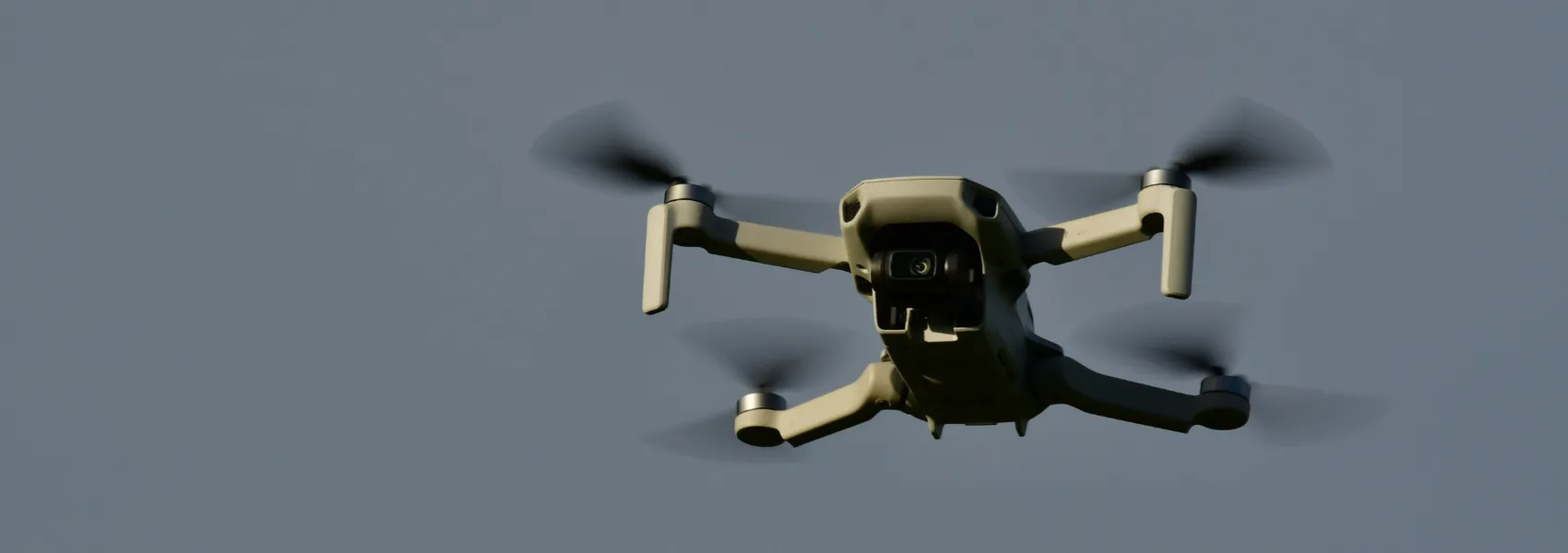
- Autonomous and small-scale solutions – drone logistics, snowmobile trails and emergency roads.
- Resilience and preparedness in civilian and military interactions – how we should use resources and methods for both civilian and military purposes.
Within each specialisation, both long-term research activities for knowledge building are conducted, but also experimental innovation and demonstration projects.
VTI's research on resilience has several approaches. Our research linked to climate adaptation can be found here:
Examples of projects and collaborations
How can Sweden's transport system be planned and built to withstand serious crises and wars? This is the main question in the research project BULT – Contingency Planning in the Transport System, a five-year collaboration between VTI, FOI, LiU and KTH, funded by the Swedish Transport Administration.
The BULT programme produces new knowledge about preparedness considerations in the transport system by understanding what preparedness and resilience mean in practice and how it can be integrated into the government's and the business sector's decision-making processes and strategies.
The program analyzes, among other things:
- how contingency considerations can be integrated into policy and planning that shape the long-term development of the transport system,
- how logistics actors can create and contribute to increased resilience at actor, network and societal level,
- how technological developments may affect the resilience of future transport systems;
- scenarios for threats to future transport systems.
With 14 senior researchers from four organisations, BULT is a unique interdisciplinary initiative that will contribute to a more robust transport system and increased resilience in society.
Research focus: Resilience and robustness of logistics and mobility systems
Contact: Linea Kjellsdotter Ivert, Karolina Isaksson, Francisco Márquez Fernández
The rescue service is a crucial part of society's resilience and is closely linked to how our transport system works. When something happens, help must be able to reach – regardless of time and place. This places great demands on both mobility and reliability in the rescue service's vehicle fleet.
The transition from internal combustion engines to fossil-free alternatives affects these conditions and raises new questions about preparedness and accessibility.
The research project CERTAIN brings together academia, applied research and rescue services in a joint effort to meet these challenges. The goal is to develop fact-based decision support that helps the rescue services to plan and convert their vehicle fleets in a fossil-free and robust way.
By combining data analysis and advanced computer simulations, the researchers can study how different types of fossil-free vehicle fleets cope with real-world demands – for example, intensive call-out periods or situations with energy shortages. In this way, the project can help ensure that the rescue service of the future is both fossil-free and ready when it really matters.
Research focus:
- Resilience and preparedness in civilian and military interactions
- The interaction fossil-free and resilient
Contact: Gunnar Flötteröd
Right now, several innovative projects are underway regarding autonomous solutions linked to resilience and preparedness in civilian and military interaction:
- Resilience tests of drone systems
- Drone logistics for the front line
- Drone bases for better transport capacity in rural areas
- Autonomous transport on snowmobile trails
- Living Lab for autonomous transport in sparsely populated areas
- Small-scale logistics along the Vindel River - large transport robots
Research Focuses:
- Autonomous and small-scale solutions
- Resilience and preparedness in civilian and military interactions
Contact: Pia Kristiansson
Long-term impact of recurring disruptions on liner shipping and supply chains
In recent years, liner shipping has been affected by several recurring disruptions. Since the labour market dispute at APM Terminals in Gothenburg, researchers at the University of Gothenburg and SSPA (now part of RISE) have followed how the disruptions affect shipping companies, ports and transport buyers. When new events have hit the transport chains, Chalmers and VTI have also joined the research.
The project aims to increase the understanding of the nature of disturbances and how they affect different actors in the transport system. In contrast to previous studies, which have mainly focused on short-term effects, this study examines the long-term consequences and how experiences from past disturbances can contribute to increased resilience in the future.
Research focus: Resilience and robustness of logistics and mobility systems
Contact: Martin Svanberg
SAEKERT (Secure, adaptable, economical and climate-neutral energy supply for resilient transport systems)
The project is about understanding and investigating technical aspects of a resilient vehicle fleet and its connection to the local energy system.
Among other things, vehicle movements and patterns are mapped under municipal and regional auspices in order to find out where and how energy in the vehicles is located in a simulated environment, as well as charging and support (V2G) facilities, as well as the design of vehicle depots with local energy production, storage and charging facilities.
CRITIC (CRItical Transports and Infrastructure in Crises)
The project develops methods to identify critical transport flows and the energy infrastructure required to maintain socially important functions during crises.
As the transport sector is responsible for up to 30% of the EU's carbon dioxide emissions, electrification is crucial to reduce emissions. The method will be illustrated through case studies within a limited geographical area.
Research focus: Critical nodes and security
Contact: Anton Karlsson, Martin Svanberg and Francisco Márquez Fernández
Triple F - Towards a fossil-free and resilient transport system – conflicts of interest and synergies.
When the climate transition requires rapid and powerful changes, the transport system faces a double challenge: to become both fossil-free and resilient.
How do logistics actors' strategies on sustainable supply chains affect the system's ability to cope with disruptions such as pandemics, wars and climate change?
Results from the project are intended to support goods owners (transport buyers) and logistics and transport companies (transport sellers) with knowledge of how different measures to transition to fossil-free can affect the resilience of individual actors as well as the resilience of the transport system.
Focus: The interaction fossil-free and resilient
Contact: Martin Svanberg, Jesper Olsson and Linea Kjellsdotter Ivert.
The SNS Preparedness Commission is a three-year research initiative motivated by the deteriorating security situation in the outside world, which means that Sweden is upgrading its total defence from historically low levels, and that the risk of new pandemics and climate change brings to the fore the need for robust preparedness.
Building a resilient society requires joint efforts from public and private actors as well as civil society.
VTI participates in the Preparedness Commission as part of the research constellation. The research group's mission is to analyse and provide advice on how crisis preparedness can be implemented so that it is socio-economically efficient, which will result in a report where the goal is to contribute knowledge to good crisis preparedness at the societal level.
Research focus: Resilience and robustness of logistics and mobility systems
Contact: Henrik Andersson
VTI participates in the internationally composed working group that develops policy recommendations on climate adaptation, epidemics/pandemics and geopolitical threats – including experiential learning, development of modelling tools, data and governance.
The focus is on the resilience of the transport system. Special focus is on adaptation to the effects of climate change, management of epidemics and pandemics, and physical and digital geopolitical threats.
The main issues for the working group are:
- What can we learn from past experiences?
- How can modelling and planning tools be developed?
- How can data collection and analysis be developed?
- Which forms of decision-making are suitable for addressing the challenges?
- What needs to be done to be prepared?
Based on the focus and these issues, the working group will develop policy recommendations in the form of shorter reports. These reports focus both on more technical recommendations, but also economic evaluations as well as various forms of adaptation to the various threats/risks that exist.
Work is progressing according to plan and is currently in the process of finalising the draft reports. Final completion is expected in the first quarter of 2026.
Focus: Resilience and robustness of logistics and mobility systems
This page has been automatically translated using a machine translation tool. If you notice any incorrect wording or phrasing, please contact VTI’s Communications Unit.
Purpose and objectives
The aim of the research is to strengthen the transport system's resilience to crises, wars and extreme events – while continuing the transition to a fossil-free society.
The goal is to develop knowledge, methods and solutions that make transport work even under disturbed conditions. It includes:
- to analyse the resilience and robustness of logistics and mobility systems;
- to analyse the interaction between preparedness and energy transition;
- identifying and securing critical nodes in transport and energy networks;
- to test autonomous and small-scale solutions for logistics in vulnerable environments,
- to contribute with policy recommendations and decision support for authorities and actors.
Employees
Resilience and robustness of logistics and mobility systems
Magnus Berglund
Pelle Jonsson
Johan Egeskog
Håkan Carlsson
Anna Arvidsson
Henrik Andersson
Linea Kjellsdotter Ivert
Karolina Isaksson
Francisco Márquez Fernández
The interaction between fossil-free and resilient – how electrification and energy systems can function during a crisis
Linea Kjellsdotter Ivert
Martin Svanberg
Jesper Olsson
David Daniels
Critical nodes and safety – risk mitigation and robustness in transport and energy networks
Autonomous and small-scale solutions – drone logistics, snowmobile routes and emergency roads
Contact
-
Mattias Haraldsson
Head of research
mattias.haraldsson@vti.se -
Lina Nordin
Head of research
lina.nordin@vti.se -
Jonas Jansson
Head of research
jonas.jansson@vti.se