
Climate adaptation
VTI conducts a broad range of research on climate adaptation and how climate change affects the transport system. We work both to understand the effects and to develop strategies and solutions that make the transport system, and society at large, more resilient to the new conditions that climate change brings.
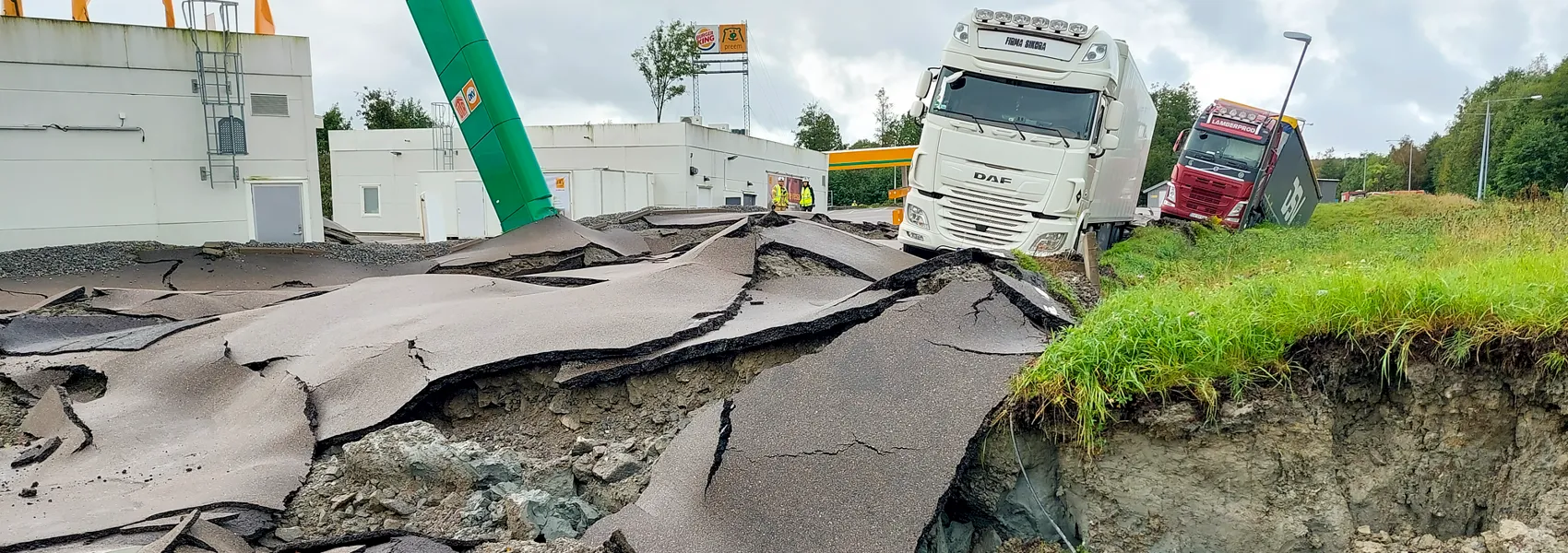
The climate is changing and risks such as floods, landslides, erosion, landslides, heat, droughts and fires are expected to increase. These risks affect accessibility and accessibility, which can have serious consequences for both infrastructure and people and lead to major costs for society.
Subject areas
- Law and administration
- Environmental impacts
- Planning, policy and governance
- Socio-economic and ecosystem values
- Strategies and decision support
- Stormwater management
- Road technology, materials and technical solutions
- Winter road maintenance
VTI's research on resilience has several approaches. We gather our research linked to the robustness of the transport system linked to external threats and preparedness in civilian and military interactions, and more here:
Climate change adaptation needs to be seen as an integral part of good community planning and development, and is one of the tools for achieving increased resilience around the climate.
In some cases, this may mean simple solutions, in other cases it may require major system changes and new approaches. To achieve this, knowledge and collaboration are needed. In this way, synergies and win-win solutions are also possible.
Gunnel Göransson, Research Director in Climate Change Adaptation at the Environmental Unit at VTI
Research to strengthen collective mobility in a more extreme climate
Contact: Jens Portinson Hylander To the project page
Cloudburst routes of existing infrastructure
Contact: Gunnel Göransson Project page: Cloudfall trails
Construction, function and follow-up of multifunctional structures for climate adaptation
Contact: Fredrik Hellman Project page: InfraSweden
The impact of climate change on airfields
Contact: Lina Nordin
Dynamic climate adaptation strategy for a coastal railway in southern Sweden
Contact: Gunnel Göransson
COALA: Climate adaptation of the coast through flexible land use.
Contact: Gunnel Göransson Project page: COALA, sgi.se
Navigating the future: Towards a fossil-free and resilient transport system – the port's role and climate adaptation to extreme weather events
Contact: Gunnel Göransson, Project page: Navigating the future
PolKaT
Design-driven policy lab for climate adaptation of the transport system
Contact: Gunnel Göransson, Project page: PolKaT
Room4water
Changing capacity to deal with extreme weather events by making room for the water – from mind to map.
Contact: Gunnel Göransson Project page: Room4water
Condition assessment and root cause analysis of subsidence on railways with InSAR
Contact: Gunnel Göransson, Peter Torstensson
Winter road maintenance in a changing climate
Contact: Anna Arvidsson
Photo: Tobias Thorén, SGI
This page has been automatically translated using a machine translation tool. If you notice any incorrect wording or phrasing, please contact VTI’s Communications Unit.
Research on climate adaptation
Our research covers all modes of transport and is often both interdisciplinary and cross-sectoral.
Our overall goal is to contribute to a resilient transport system with reduced climate and environmental impact.
By adapting the transport system to climate change, we can maintain accessibility and accessibility even in the event of extreme weather events (the functional objective) and at the same time reduce the risk of accidents and environmental impact (the consideration objective).
Contact
-
Gunnel Göransson
Senior Research Leader
gunnel.goransson@vti.se -
Fredrik Hellman
Senior Research Leader
fredrik.hellman@vti.se