
Data sharing & digitalisation
Data sharing in the transport sector is about different actors – authorities, companies, researchers and the general public – being able to share and access data about the transport sector, which creates the conditions for smart solutions and better decisions.
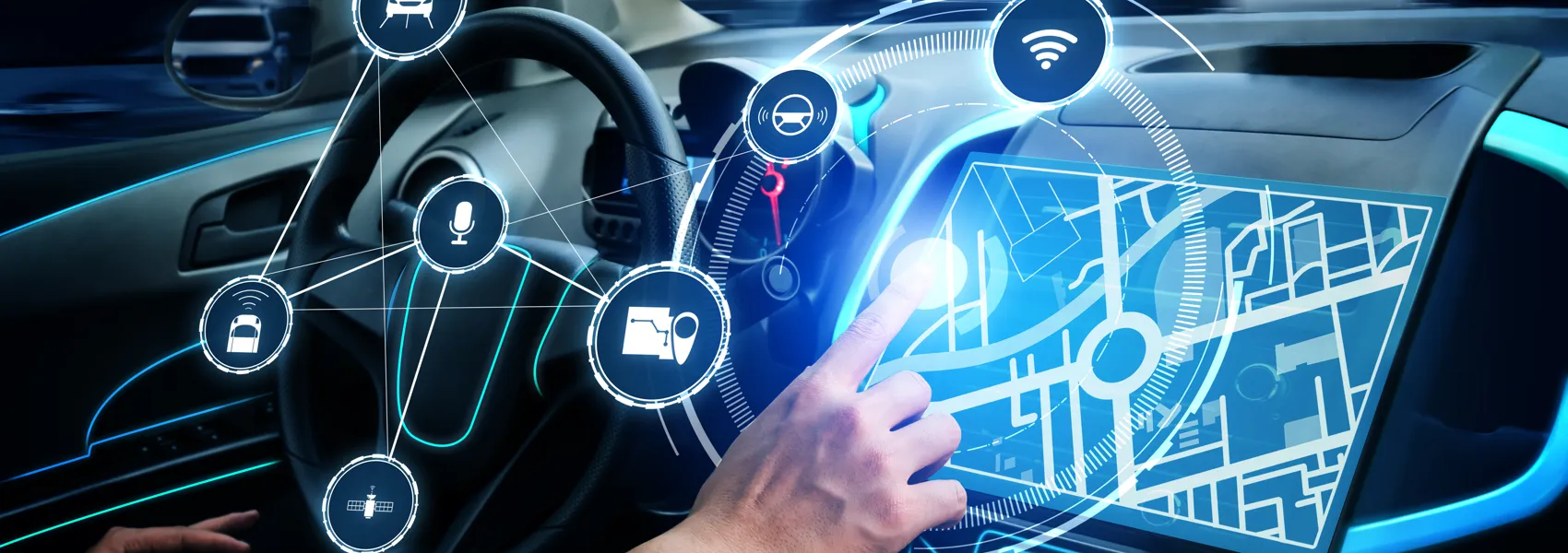
Digitalisation is fundamentally reshaping many functions in the transport system – at the same time as new mobility needs are driving digital development forward. Well-functioning data sharing is key to enabling innovative services, sustainable business models and regulation that keeps pace with developments.
Research focus
Here you will get an overview of the research VTI conducts in data sharing and digitalisation, as well as the opportunities, challenges and developments that are taking place in the field.
As vehicles become increasingly connected and autonomous in their driving, new demands are emerging on the surrounding society. An important area is the development of digital regulation and regulatory follow-up.
Traffic rules that are currently communicated through written traffic regulations and physical signs will need digital equivalents to enable the regulation of increasingly autonomous vehicles such as cars and autonomous delivery robots.
Thanks to increased digital capabilities in society, such as image recognition and sensors, together with aggressive EU regulation and innovative approaches from public actors, new opportunities are opening up for monitoring compliance with government regulations and permits through data-based policy instruments.
Delivery robots represent a new category of autonomous means of transport that move in both densely populated urban environments and rural areas, sharing the street space with pedestrians, cyclists and other road users.
The robots have the potential to streamline last-mile freight transport by replacing larger vehicles and making goods distribution more accessible to people with limited mobility.
At the same time, new challenges arise around how the robots are integrated into local communities and how they interact with people who meet them on the street. This requires the development of clear policies for permit processes, standards for how the robots should communicate with the environment through external interfaces, as well as guidelines for where the robots are allowed to park and how they should be handled in different weather conditions.
Rural areas present particular challenges with severe winter conditions and sparsely populated areas, but also opportunities to develop business models and working methods that contribute to a more inclusive transport system through service design and testing activities.
Through empirical studies of actual robot operations in both urban and rural areas, knowledge can be built about both human behavior around the robots and operational challenges, which can inform both local and national standardization.
Combined mobility, where travelers use multiple modes of transportation – often through digital platforms – to reach their destinations, strengthens the foundation of public transport and includes services such as electric scooters and taxis.
The aim is to make the transport system more efficient and sustainable.
With the electrification of the transport system comes new needs for data sharing at the interface between vehicles and infrastructure.
This also includes the interaction between the transport system and the energy system, with data exchange on charging needs, battery capacity and payment information.
In addition to technological developments, there is also increased regulation of the data infrastructure, especially at the EU level. These changes entail requirements for data management and what data may be shared, as well as requirements for the publication of certain data sets if they are available digitally.
This page has been automatically translated using a machine translation tool. If you notice any incorrect wording or phrasing, please contact VTI’s Communications Unit.
Purpose and objectives
Purpose of the research area The research area focuses on understanding data sharing together with the surrounding context – such as travellers, authorities, organisational roles, business models and regulation – and how this interaction can enable or hinder a digital transformation of functions in the transport system.
The goal is to contribute to solutions both in early development phases and in scale-up, generate a basis for decisions, disseminate knowledge about new areas of use and publish peer-reviewed articles.
Employees
More about VTI's government assignment for digitalisation and charging infrastructure.