
LIFE-NEEVE presents research at IDiBE-UMH Scientific Meeting 2026
%20neeve%20idibe(2).webp)
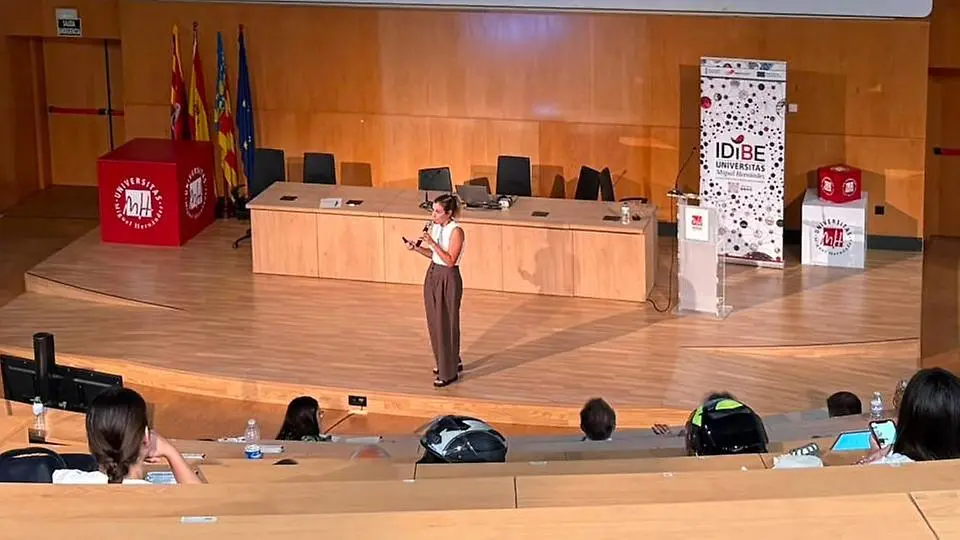
Presenter: Verónica Ruiz-Torres. Photo: Neeve Project
At the IDiBE-UMH Scientific Meeting 2026, the latest advances from the European LIFE-NEEVE project were presented, highlighting research into how traffic-related pollution may affect human health.
Within LIFE-NEEVE, researchers are developing 3D skin models and lung organoids to assess the potential health effects of particles generated by tyre, brake and road pavement wear.
The research also includes novel low-emission materials developed within the project. Understanding the health effects of these particles is becoming increasingly relevant with the growing adoption of electric vehicles.
The scientific meeting provided an opportunity to share the project’s research, progress and new perspectives with colleagues at IDiBE.
What are non-exhaust emissions?
Non-exhaust emissions are particles released from road traffic that do not come from the exhaust pipe. They include fine particles (PM2.5 and PM10) and microplastics generated by tyre wear, brake wear, road surface wear, and road dust resuspension.
The LIFE NEEVE project studies how both tyre and brake systems contribute to these emissions under real driving conditions, and how material properties and friction influence particle formation.
As exhaust emissions decrease, non-exhaust sources are becoming a growing share of total traffic-related pollution, with increasing focus on tyres, brakes, and road surfaces.
In the research presented in this article, LIFE NEEVE is investigating the potential health effects of these particles using advanced biological models, including 3D skin models and lung organoids.